To measure a window cleaning contractor’s performance, track five core KPIs: visit completion rate (target 95%+), missed area rate (below 5%), response time to issues (within 24 hours), complaint volume (trending down month on month), and whether accreditations and compliance documentation remain current. Review these monthly and hold a formal quarterly meeting with your contractor to discuss trends and agree any remedial action.
Appointing a commercial window cleaning contractor is the straightforward part. Knowing whether they are actually delivering once the contract is signed is where most property managers and facilities teams have no formal process in place.
Without a clear framework for measuring performance, issues tend to surface through complaints rather than data, and underperformance can continue unchallenged for months before it is formally addressed.
This guide sets out a practical KPI framework that any property manager can apply to any window cleaning contractor, along with guidance on what good completion evidence looks like, how to structure review meetings, and what to do when performance slips.
Why Performance Tracking Matters Once a Contract Is Signed
A signed contract sets out what should happen. A performance framework tells you whether it is.
The two are not the same thing, and treating contract compliance as a given rather than something to be actively monitored is one of the most common mistakes in facilities management.
For commercial properties in London managing multiple buildings or a large portfolio, the gap between what is contracted and what is delivered can be significant.
Missed visits, incomplete cleans, slow responses to complaints, and poor communication are all issues that tend to go undocumented until they become a problem.
By the time a formal complaint is raised, the contractor may have underdelivered across dozens of visits without a clear audit trail to support any remedial action.
A KPI framework changes that. It creates a shared, objective language between you and your contractor, sets clear expectations from the outset, and gives both parties a basis for productive review conversations rather than reactive disputes.
Core KPIs to Track
The following KPIs provide a robust and reusable framework for measuring window cleaning contractor performance across most commercial settings. They can be adapted to suit your building type, contract frequency, and internal reporting requirements.
Visit completion rate
The percentage of scheduled visits that are completed on time and in full. A well-run contractor on a regular contract should consistently achieve 95% or above.
Anything below 90% warrants a formal conversation. Track this on a monthly basis and review trends across quarters to distinguish between one-off issues and a pattern of underdelivery.
How to measure it: Compare scheduled visits against confirmed completions.
Completion should be evidenced, not self-reported. See the section below on what good completion evidence looks like.
Missed area rate
The percentage of scheduled visits that are completed on time and in full. A well-run contractor on a regular contract should consistently achieve 95% or above.
Anything below 90% warrants a formal conversation. Track this on a monthly basis and review trends across quarters to distinguish between one-off issues and a pattern of underdelivery.
How to measure it: Compare scheduled visits against confirmed completions.
Completion should be evidenced, not self-reported. See the section below on what good completion evidence looks like.
Response time to issues
How quickly the contractor responds to a reported problem, whether that is a missed area, a complaint from a resident, or a request for additional work.
For commercial contracts, a response within 24 hours is a reasonable expectation for acknowledgement, with a resolution or remedial visit agreed within five working days unless the issue requires specialist access or scheduling.
How to measure it: Log the date and time of every complaint or issue raised and record when a formal response was received. Track average response times monthly.
Complaint volume
The total number of complaints received per visit or per month, broken down by type.
Distinguishing between complaints about quality, missed areas, operative conduct, and communication helps identify whether issues are systemic or isolated.
A rising complaint trend is a leading indicator of wider performance problems, often before visit completion rates begin to drop.
How to measure it: Maintain a complaints log with date, nature, location, and resolution for each issue. Review monthly and include in quarterly contractor meetings.
Accreditation and compliance status
Whether the contractor maintains current accreditations, insurance certificates, and compliance documentation throughout the contract period, not just at the point of appointment.
Accreditations including CHAS, SafeContractor, ISO 9001, ISO 14001, and ISO 45001 require periodic renewal, and a contractor who lets these lapse mid-contract is a compliance risk for the building owner.
IRATA certification for rope access operatives should also be confirmed as current for any at-height work. Our guide to commercial window cleaning accreditations covers what each one means and how to verify it.
How to measure it: Request renewed certificates at each annual contract review as a minimum, and whenever a new operative is introduced to the site.

What Good Completion Evidence Looks Like
Self-reported completion is not sufficient for a commercial cleaning contract.
A contractor telling you a visit has been completed is not the same as evidencing it, and for portfolio managers, block managers, or facilities teams with multiple sites, the ability to access reliable completion records without chasing is fundamental to effective contract management.
Good completion evidence typically includes one or more of the following:
Timestamped visit confirmations
Are sent automatically or on request, confirming the date, time, operative name, and areas covered on each visit.
This should be available as a matter of course, not something you have to request after the fact.
Photographic records
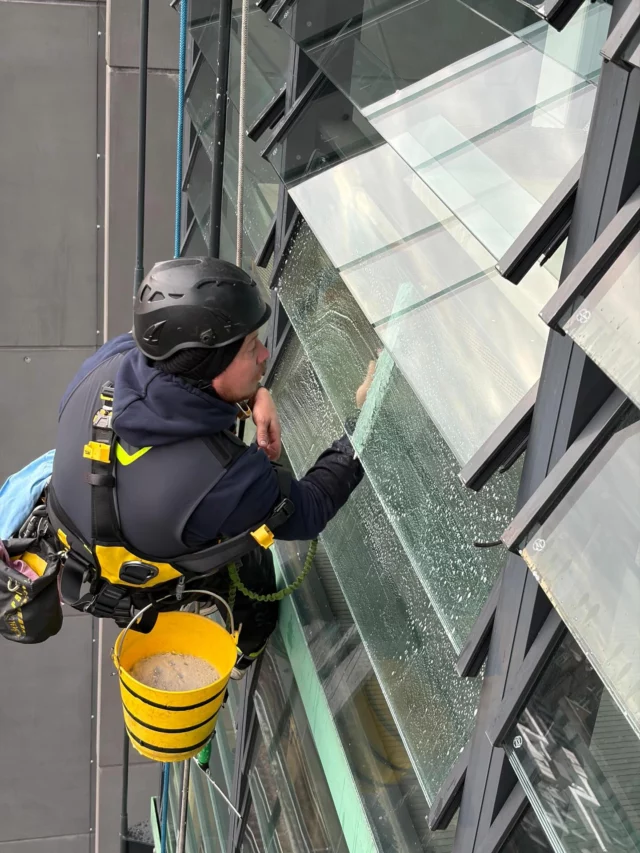
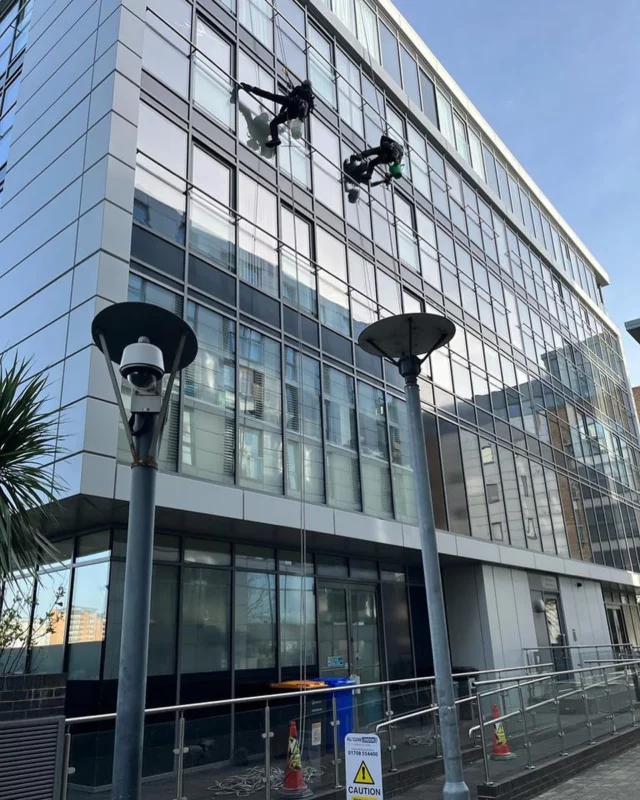
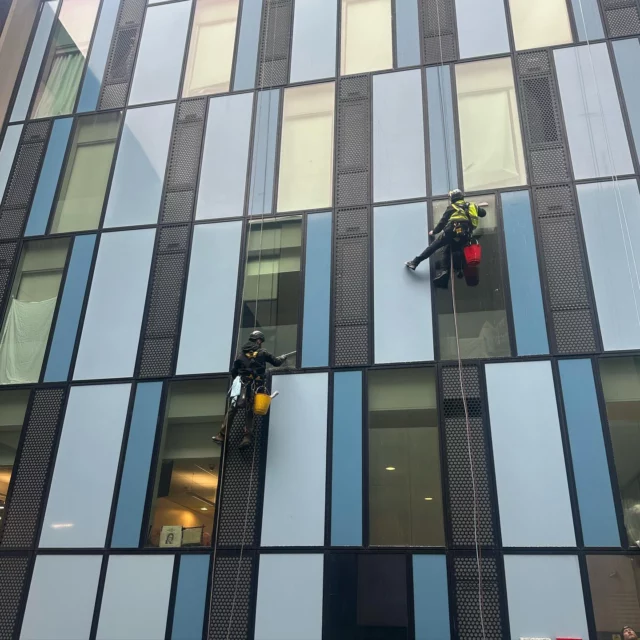
Of completed work, particularly for high-rise or access-based cleans where the work is not easily visible from ground level.
For rope access or BMU cleans, photos taken by the operative during the visit provide the clearest evidence that work has been carried out to the contracted standard.
Digital service logs
Are accessible by the building manager or property management team. A digital platform that records each visit against the contracted schedule, with operative details and area coverage, removes ambiguity and provides an auditable trail for compliance, warranty, and insurance purposes.
At All Clean London, commercial clients can access their full service history through Facade360+, our client portal that logs every clean with date, operative records, and areas covered.
For portfolio managers overseeing multiple buildings, this means completion records are always accessible without the need to request them manually, and any discrepancy between the contracted schedule and actual visits is immediately visible.
Setting Up a Simple Review Cadence with Your Contractor
Performance conversations should happen before problems become entrenched, not after.
A simple review cadence agreed at the start of the contract creates a structure for these conversations and signals to the contractor that performance is being actively monitored.
A practical review structure for most commercial cleaning contracts:
Monthly:
A brief operational check-in, either by email or a short call, covering visit completion for the previous month, any outstanding complaints or snagging items, and any upcoming access or scheduling considerations.
This does not need to be a formal meeting, but it should be documented.
Quarterly:
A more formal review covering the KPIs above, trends in complaint volume and response times, compliance documentation, and any changes to the building or the contract scope.
This is the appropriate moment to raise concerns formally if performance has been below expectation.
Annual:
A full contract review covering the previous twelve months of performance data, any changes to the building portfolio or service requirements, pricing, and whether the contract should be renewed, renegotiated, or re-tendered.
The key principle is that review meetings should be data-led rather than impression-led. Bringing the KPI data to each meeting means the conversation is grounded in evidence rather than perception, which is fairer to both parties and more likely to result in genuine improvement.
What to Do When Performance Slips
Most performance issues in commercial cleaning contracts are fixable when they are addressed early and directly.
A structured approach to managing underperformance is more effective than escalating immediately to contract termination, which is disruptive and costly for both parties.
Step 1: Document and raise the issue formally. Do not rely on verbal conversations. Put the issue in writing, referencing the specific visit, location, and nature of the problem.
Include the relevant KPI data where it supports your concern. This creates a record and signals that the issue is being tracked.
Step 2: Request a root cause explanation. A professional contractor should be able to explain why a visit was missed, an area was incomplete, or a complaint went unresolved, and set out what they will do differently.
If they cannot provide a credible explanation, that is itself useful information about how the relationship is likely to proceed.
Step 3: Agree a remedial plan with timescales. If the issue is fixable, agree a specific plan with measurable outcomes and a review date.
For example: missed area rate below 5% for the next three months, or all complaints acknowledged within 24 hours. Document this agreement.
Step 4: Escalate formally if performance does not improve. If performance remains below the agreed standard after a remedial period, the formal contract terms apply, including any provisions for remediation visits, service credits, or notice periods.
At this stage, having a documented performance record is essential.
Before reaching that point, it is worth reviewing whether your contractor holds the accreditations and compliance standards you would expect.
Our guide to seven questions to ask before hiring a commercial window cleaning company covers the pre-appointment checks that reduce the likelihood of performance issues arising in the first place.
A Simple KPI Tracker Template
The table below provides a starting point for tracking window cleaning contractor performance on a monthly basis. Adapt the columns and targets to suit your contract and building type.
| KPI | Target | Month 1 | Month 2 | Month 3 | Notes |
|---|---|---|---|---|---|
| Visit completion rate | 95%+ | ||||
| Missed area rate | Below 5% | ||||
| Response time to issues | Within 24hrs | ||||
| Complaint volume | Trending down | ||||
| Accreditations current | Yes | ||||
| Digital completion records provided | Yes |
Track this monthly and bring the completed data to each quarterly review meeting. Over time, it gives you a clear picture of whether performance is improving, stable, or declining, and a documented basis for any formal action if needed.
A Final Note on Contractor Relationships
Performance management works best when it is collaborative rather than adversarial.
A good contractor will welcome a clear KPI framework because it removes ambiguity about what is expected and gives them an objective basis for demonstrating their performance.
A contractor who resists performance tracking is worth examining more closely.
At All Clean London, we work with property managers, block managers, and facilities teams across London who manage everything from single commercial buildings to large residential portfolios.
Our Facade360+ platform is designed precisely to make performance visible without requiring our clients to chase for it, and our team is available to discuss any aspect of a clean, a schedule, or a service standard whenever it is needed.
If you are reviewing your current window cleaning contract or considering a new appointment, our commercial window cleaning service page covers the full range of services we provide across London.
Request a free quote today and find out how All Clean London manages performance as standard.