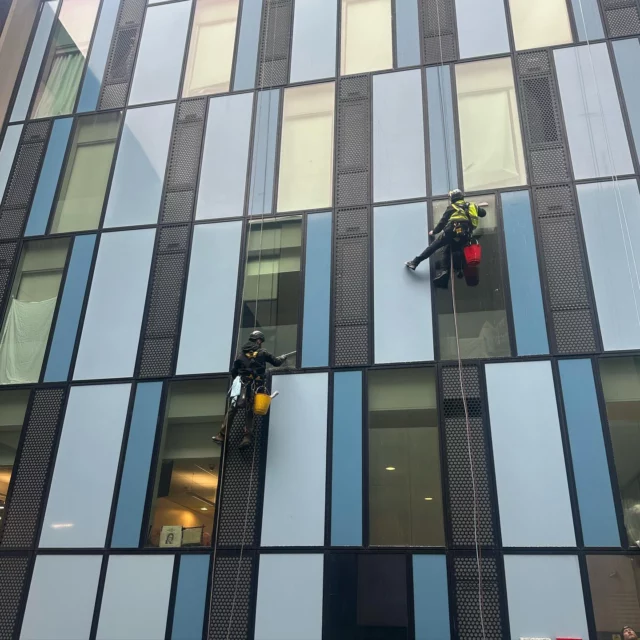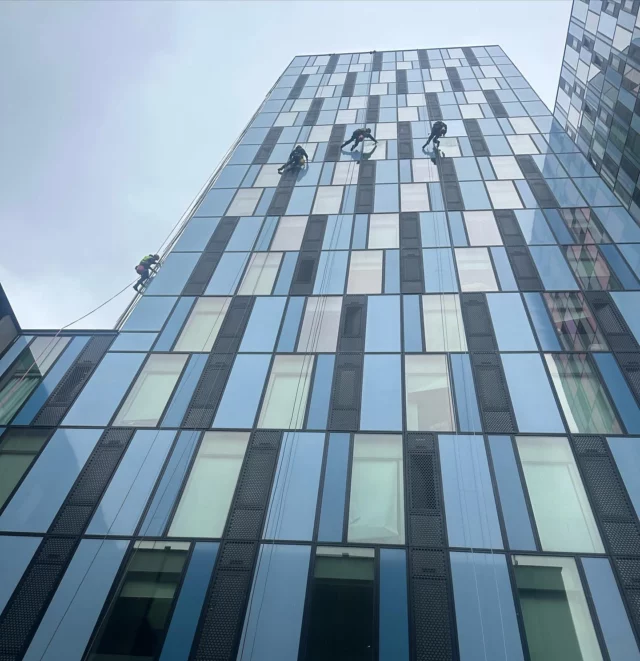
Yes, commercial window cleaners must follow COSHH (Control of Substances Hazardous to Health) regulations whenever they use or handle substances that pose an occupational health risk. However, the level of compliance required depends entirely on the cleaning method used.
For contractors using pure water systems with no chemical additives, the COSHH burden is significantly reduced compared to those using detergents, chemical treatments, or specialist cleaning agents.
Understanding how COSHH applies to window cleaning helps property managers and facilities teams appoint contractors who are genuinely compliant, not just on paper.
What Is COSHH and Why Does It Apply to Window Cleaning?
COSHH stands for the Control of Substances Hazardous to Health Regulations 2002. Under this legislation, employers and self-employed contractors are legally required to identify, assess, and control exposure to hazardous substances in the workplace.
For window cleaning contractors, this applies to any chemical cleaning agents, glass treatment products, water additives, biocidal products, or specialist substances used on site.
The HSE’s COSHH guidance for the cleaning industry sets out the specific obligations that apply, including the requirement for written risk assessments, safety data sheets, operative training, and skin protection measures.
These requirements apply to any contractor carrying out cleaning work on commercial premises in the UK under the Control of Substances Hazardous to Health Regulations 2002.
What COSHH Obligations Do Commercial Window Cleaners Have?
Any contractor using chemical substances as part of their window cleaning work must meet the following COSHH requirements:
Risk assessments for every chemical product used on site. This means formally identifying the hazard, assessing the likelihood and severity of exposure, and documenting the control measures in place. A risk assessment must be carried out for each product and reviewed regularly or whenever working conditions change.
Safety data sheets for all cleaning solutions and additives. These are manufacturer-issued documents that contain information on the substance’s composition, hazards, safe handling procedures, and emergency measures. Contractors must have access to current safety data sheets for every chemical product on site.
Staff training on safe chemical handling, correct dilution, and personal protective equipment (PPE). Operatives must understand the risks of the products they use and how to handle them safely. Training must be documented and kept up to date.
Skin protection measures to prevent occupational dermatitis, which is a recognised risk for cleaning operatives who regularly handle chemical substances or treated water. Contractors must have a documented skin protection plan in place where the risk has been identified.
For property managers, these are not just regulatory details. They are things you can and should verify from any contractor before appointment. Our guide on questions to ask before hiring a commercial window cleaning company covers the documentation you should request as part of your procurement process.
Does Pure Water Window Cleaning Require a COSHH Assessment?
This is the question most property managers and facilities teams do not think to ask, and the answer significantly changes the compliance picture.
Pure water window cleaning uses deionised or filtered water with no chemical additives.
Because there are no hazardous substances involved in the cleaning process itself, the COSHH obligation for standard pure water window cleaning on commercial buildings is dramatically reduced.
There are no chemicals to assess, no safety data sheets required for the cleaning agent, and no chemical exposure risk for operatives carrying out the work.
This is not a loophole. It is simply the practical outcome of a cleaning method that removes chemical agents from the process entirely.
The HSE confirms that COSHH risk assessments are required where hazardous substances are present. Where they are not, the regulatory burden is proportionally reduced.
At All Clean London, pure water systems are our standard method for commercial window cleaning across low and mid-rise buildings. Our guide to pure water window cleaning explains how the method works and why it produces better results for commercial buildings as well as reducing chemical risk.
When Does COSHH Become More Significant in Window Cleaning?
While pure water cleaning reduces COSHH risk significantly for standard window cleaning, there are situations where COSHH compliance becomes more involved:
Specialist facade cleaning using chemical agents such as graffiti removal products, limescale treatments, or glass restoration chemicals.
These substances typically require full COSHH assessments, safety data sheets, and trained operatives with appropriate PPE. Our jet washing and graffiti removal service uses only appropriate products with full compliance documentation in place.
DOFF steam cleaning uses no chemicals but operates at temperatures of up to 150 degrees Celsius. While the COSHH burden is low, separate risk assessments under working at height and heat regulations apply.
Our guide to DOFF facade cleaning covers how this method works in practice on commercial buildings in London.
Biocidal products used to treat biological growth such as algae, moss, or lichen on facades. Biocides are classified as hazardous substances and require full COSHH assessment, registration under the Biocidal Products Regulation, and trained operatives.
Glass restoration chemicals used to remove deep mineral deposits, oxidation, or scratching from glass surfaces. Our glass restoration service uses specialist products with full safety documentation maintained for every site.
In all of these cases, All Clean London maintains COSHH assessments, safety data sheets, and operative training records as part of our standard compliance documentation, which is available to property managers and facilities teams on request.

When COSHH applies by cleaning method
| Cleaning Method | COSHH Level | Reason |
|---|---|---|
| Pure water window cleaning | Minimal | No chemical substances used |
| DOFF steam cleaning | Low | No chemicals; heat and height risk assessed separately |
| Jet washing (standard) | Low to medium | Depends on whether cleaning agents are added |
| Glass restoration | Medium to high | Specialist chemical products require assessment |
| Graffiti removal | High | Chemical agents require full COSHH assessment |
| Biocidal treatments | High | Classified as hazardous substances under COSHH |
How Does All Clean London Approach COSHH Compliance?
COSHH compliance is built into how we operate across every service, not treated as a box-ticking exercise. Here is what that looks like in practice:
Pure water systems are used as standard for the vast majority of our commercial window cleaning work, eliminating chemical risk from the process and reducing COSHH obligations for both our operatives and the buildings we work on.
Where specialist products are required, we maintain up to date COSHH assessments and safety data sheets for every substance used on site. These are reviewed regularly and updated whenever products or working conditions change.
All operatives receive training on safe handling procedures and PPE requirements as part of their onboarding and ongoing compliance programme. Training records are documented and available on request.
Our approach to chemical-free cleaning also reflects our broader commitment to environmental responsibility. Using pure water systems across standard operations means no chemical run-off, no risk to surrounding plant life or water drainage, and no chemical residue on building materials.
For clients with ESG (Environmental, Social, and Governance) commitments or sustainability reporting requirements, this is a relevant differentiator. You can read more about our approach on our sustainability page.
For a full picture of the accreditations and compliance standards All Clean London holds, our guide to commercial window cleaning accreditations covers what each one means and what to look for when evaluating any contractor.
What Should Property Managers Ask Their Window Cleaning Contractor About COSHH?
Before appointing any commercial window cleaning contractor, these are the COSHH-related questions worth asking:
- Can you provide your COSHH assessments for the products used on our site?
- Are your operatives trained in safe chemical handling and is that training documented?
- Do you use pure water systems or chemical cleaning agents for standard window cleaning?
- What specialist products do you use for facade cleaning or glass treatment and do you have current safety data sheets for each one?
- Do you carry employers’ liability and public liability insurance that covers chemical-related incidents on site?
A reputable contractor should be able to answer all of these questions clearly and provide documentation without hesitation. If they cannot, that is a meaningful compliance gap regardless of how competitive their pricing is.
Frequently Asked Questions
This varies by contractor and cleaning method. Pure water window cleaners use no chemicals at all. Contractors using traditional methods may use glass cleaning detergents, water additives, or specialist treatment products.
For facade cleaning, graffiti removal, or glass restoration, specialist chemical agents may be required, each of which requires a full COSHH assessment.
For the cleaning process itself, no. Pure water cleaning uses no hazardous substances, so there are no chemical risks to assess under COSHH. The regulations require assessments where hazardous substances are present. Where they are not, the obligation is correspondingly reduced.
COSHH Compliance Starts With the Right Contractor
Understanding how COSHH applies to commercial window cleaning helps property managers make better-informed decisions when appointing or reviewing a contractor.
For the majority of standard window cleaning work, a contractor using pure water systems presents minimal COSHH risk. For specialist work involving chemical agents, the compliance requirements are more extensive and should be verified before any work begins.
At All Clean London, full COSHH compliance documentation is available to every client on request. Whether you manage an office block, apartment building, school, or commercial portfolio, our team is happy to walk you through the documentation before any work starts.
Request a free quote today and our team will provide everything you need to appoint with confidence.